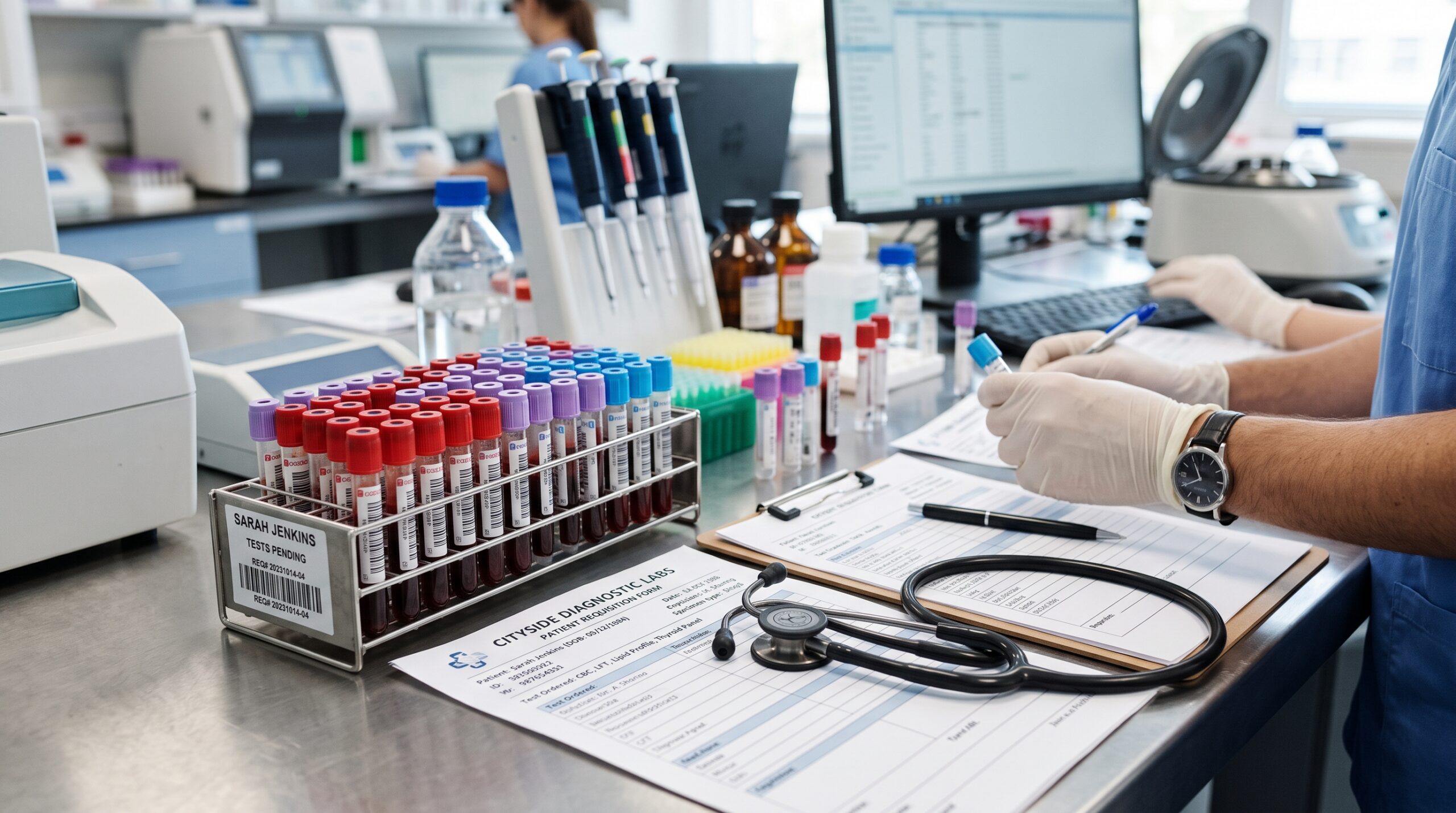
Exogenous intake of androgenic hormones requires rigorous biochemical monitoring. Assessing overall health based solely on subjective feelings or appearance in the mirror is a systematic error: most systemic damage—affecting the cardiovascular, hepatic, renal, and endocrine systems—progresses completely asymptomatically before becoming clinically apparent. Knowing exactly which blood tests to perform before, after, and during a testosterone cycle is the only scientific method for quantifying the impact on the body, reducing risk factors, and planning a restoration of the physiological axis.









Phase 1: Blood tests before your period (Baseline)
The blood chemistry tests performed before starting the program serve as the baseline. Without this initial reference point, it is impossible to determine whether a subsequent abnormality is the result of the compounds used or a preexisting latent predisposition. Blood sampling should be scheduled during a rest period, after at least 48 hours of abstaining from high-intensity training, so as not to skew transaminase and muscle marker levels.
1. Comprehensive Hormonal Assessment
It is used to assess pituitary and testicular function prior to exogenous suppression:
- Total Testosterone and Free Testosterone: to assess baseline endogenous production.
- SHBG (Sex Hormone-Binding Globulin): essential for calculating the actual bioavailable concentration.
- LH (Luteinizing Hormone) and FSH (Follicle-Stimulating Hormone): key indicators of pituitary signaling; they will serve as the essential benchmark for determining post-cycle recovery.
- Estradiol (high-sensitivity E2): baseline measurement to monitor future aromatase conversion.
- Prolactin: Chronic elevation of prolactin causes erectile dysfunction and secondary gynecomastia.
- DHEA-S and Blood Cortisol: to assess adrenal-cortical balance.
2. Cardiovascular Function and Hematological Profile
- Complete Blood Count with Differential: The primary focus is on hematocrit (Ht) and hemoglobin (Hb). Testosterone directly stimulates renal erythropoietin (EPO); starting with a hematocrit that is already close to or above 50% exposes the patient to immediate risks of blood hyperviscosity and thrombosis.
- Lipid Profile: Total Cholesterol, HDL, LDL, and Triglycerides. Exogenous testosterone significantly lowers HDL levels and promotes LDL oxidation, thereby increasing the atherogenic index.
3. Liver and Kidney Function
- AST (GOT), ALT (GPT), and GGT: markers of hepatic cytolysis and cholestasis.
- Total and Fractionated Bilirubin: to verify proper biliary excretion.
- Creatinine, Azotemia (BUN), and eGFR: Estimated glomerular filtration rate is essential for determining whether the kidneys can handle the increase in nitrogenous waste and manage fluid and salt retention.
- Uric Acid: A Marker of Metabolic Overload and Kidney Function.
4. Prostate and Metabolic Health
- Total PSA (and Free PSA, if indicated): essential for ruling out subclinical prostatic hypertrophy or lesions that are sensitive to androgenic stimulation.
- Fasting blood glucose and HbA1c (glycated hemoglobin): to monitor peripheral insulin sensitivity.
- Thyroid Panel (TSH, FT3, FT4): Thyroid function directly affects drug metabolism and SHBG synthesis.
Step 2: Tests to Monitor During the Cycle
The goal of intra-cycle monitoring is not to measure total testosterone—which will inevitably be supraphysiological—but to detect organ toxicity or acute hormonal imbalances at an early stage. The ideal time window for blood sampling is generally between the 4th and 6th week after the start of the protocol.
Key parameters to monitor during construction:
- Hematocrit and Hemoglobin: If the hematocrit exceeds the critical threshold of 53–54%, peripheral vascular resistance increases exponentially, overloading the left ventricle. It may be necessary to adjust the dosage or perform therapeutic bloodletting.
- Estradiol (E2): to assess the extent of aromatase conversion. Excessively high levels cause sodium retention, hypertension, and gynecomastia; conversely, completely eliminating estradiol with disproportionate doses of aromatase inhibitors disrupts the lipid profile and worsens vascular and joint health.
- Transaminases (AST/ALT/GGT): especially when used concomitantly with C-17-alkylated compounds or oral carriers, which have intrinsic hepatotoxicity.
- Blood Pressure: a clinical parameter that should be monitored regularly at home; an increase in extracellular fluid and vascular stiffness is quickly reflected in blood pressure readings.
Step 3: Blood Tests After the Cycle (Post-Cycle and PCT)
The post-cycle blood protocol is divided into two distinct phases, based on timing and purpose:
A. Upon completion of exogenous administration
This test is performed when the drug has passed its half-life and is nearing complete metabolic clearance. It serves to confirm that hormone levels have dropped sufficiently to begin post-cycle therapy (PCT) and to assess the cumulative stress placed on the liver, kidneys, and lipid system.
B. 6–8 weeks after the end of PCT
This is the decisive test to determine whether the body has returned to hormonal homeostasis on its own. Performing the tests while still taking selective estrogen receptor modulators (SERMs such as clomiphene or tamoxifen) yields false positives, since these drugs artificially stimulate pituitary release.
In this final phase, the markers to look for are:
- LH and FSH: These levels must have returned to normal ranges, indicating that the signaling cascade from the hypothalamus to the pituitary gland has resumed.
- Total and Free Testosterone: These levels must be comparable to the initial pre-cycle baseline.
- Estradiol and Prolactin: to rule out secondary estrogen-related rebound effects.
- HDL and LDL cholesterol: to monitor the recovery of endothelial elasticity and the improvement in the dyslipidemic profile.
- Transaminases and Creatinine: to confirm a complete return to normal liver and kidney function.
Practical Conclusions
Monitoring blood markers throughout the three phases—pre, during, and post—transforms a trial-and-error approach into a protocol based on objective data. Always consult an endocrinologist or sports medicine specialist for test orders and the interpretation of test results, to avoid empirical corrective measures based solely on conjecture.